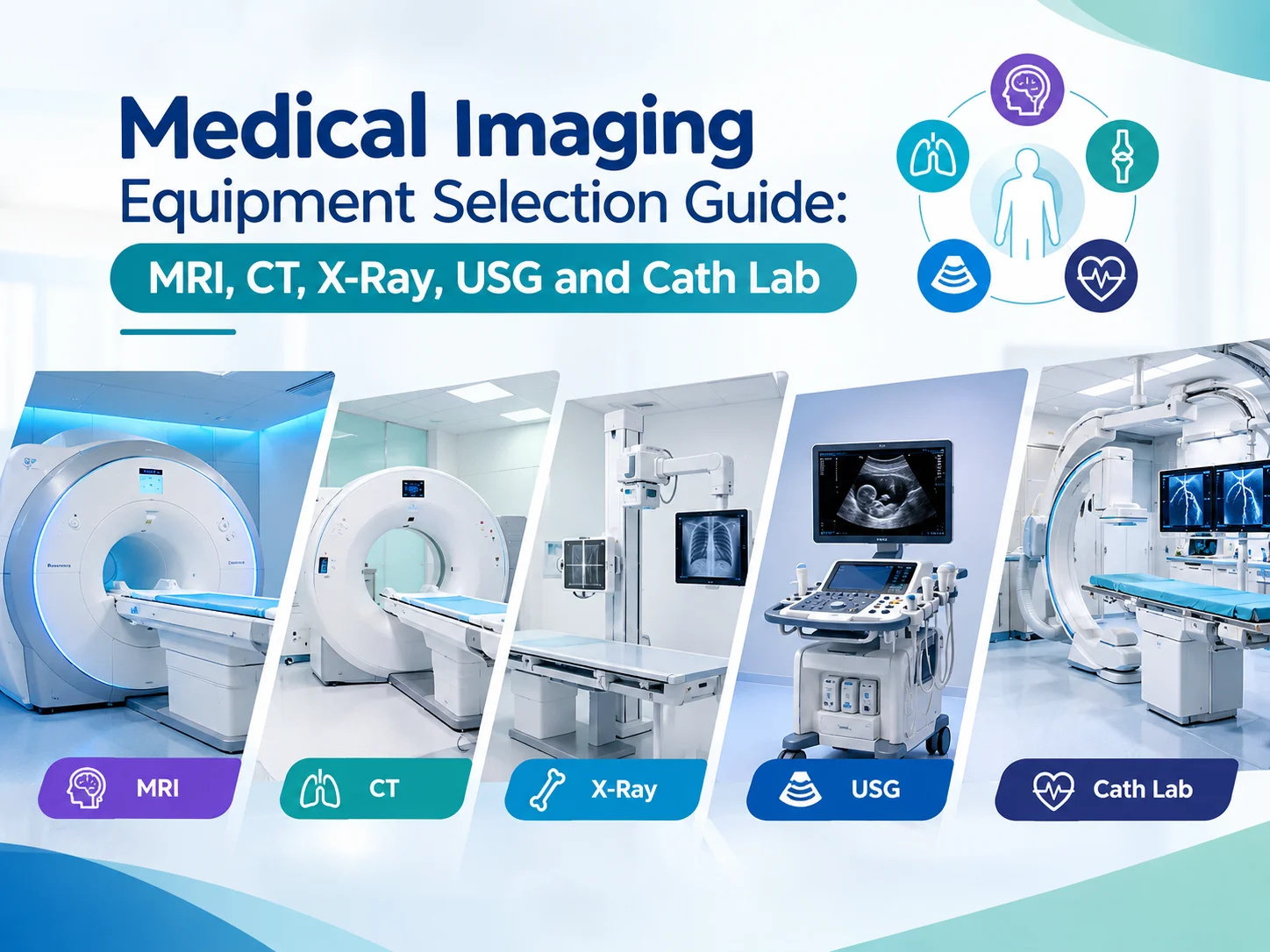
Buying a scanner is a bit like buying a house. The brochure looks lovely until someone mentions the plumbing. If you are planning a diagnostic centre or a new hospital, hospital setup consultants Noida like Nexa Health Consult will tell you the same thing: choose your medical imaging equipment around clinical needs, not the sales pitch.
This guide covers diagnostic imaging equipment across MRI, CT, X-ray, ultrasound (USG) and cath lab. Every regulatory and safety point comes from an official or peer-reviewed source, listed in the resources section at the end.
Start With Clinical Requirements Before Choosing Medical Imaging Equipment
Before comparing vendors, answer three questions. Which patients will you serve? Which cases will your radiologists and cardiologists receive? How many scans a day do you expect? Those answers set your equipment selection criteria and patient throughput targets. Nexa Health Consult starts medical equipment planning and hospital project planning here, because a cardiac hospital needs a very different diagnostic imaging department from a general diagnostic centre.
Compare MRI, CT, X-Ray, USG and Cath Lab
Every piece of medical imaging equipment answers a different clinical question. The US FDA explains that X-ray, CT and fluoroscopy use ionizing radiation, while ultrasound and MRI do not. This imaging equipment comparison shows the five modalities side by side.
Also Read This Blog: How to Set Up a General Physician Clinic in India: A Complete Guide
X-Ray and USG: The Everyday Workhorses
X-ray is the oldest form of medical imaging, and digital radiography is the usual first purchase for a new facility. Ultrasound uses sound waves, so it avoids radiation and helps track fetal development. Think of USG as the Swiss Army knife of a diagnostic facility setup. It needs far less room preparation than MRI or CT, but image quality still varies by system, so test before you commit.
CT: Speed With a Dose Attached
CT builds images from many X-ray projections, so the FDA notes it delivers a higher dose than conventional radiography. The FDA’s white paper adds that in the US, CT, interventional fluoroscopy and nuclear medicine make up about 26% of radiation-based imaging procedures but 89% of the exposure. Treat dose as a purchasing factor for any medical imaging equipment that uses X-rays. Ask each CT scanner vendor how the system lowers dose without hurting diagnostic accuracy.
In India, AERB requires a licence for CT units. Its guidelines also ask CT and cath lab facilities to nominate a Radiation Professional as Radiation Safety Officer.
MRI: Powerful, Fussy and Worth Planning Properly
An MRI scanner uses no ionizing radiation, which is the good news. The planning news is longer. MRI siting is where medical imaging equipment budgets suffer most, so involve a medical physicist early. The American College of Radiology’s four-zone model controls who enters the magnet area. The 5 gauss line marks a common safety boundary, and a quench pipe must vent helium safely if the magnet quenches. RF shielding, vibration and nearby moving metal also affect image quality. Good space planning prevents expensive surprises.
Cath Lab: Where Cardiology Meets Infrastructure
A cardiac catheterization laboratory relies on X-ray angiography. Typical components include an angiography system, a C-arm system, a contrast media injector and radiation shielding. AERB lists cath lab equipment and C-arms among the diagnostic X-ray equipment covered by e-LORA. Cardiologists, biomedical engineers and a medical physicist should sign off on the layout together. Retrofitting shielding later is painful.
Regulatory Checks for Medical Imaging Equipment in India
Three bodies matter most:
AERB: Operating a medical diagnostic X-ray facility requires an AERB licence through e-LORA, with layout and shielding details.
CDSCO: MRI, CT and X-ray machines are notified devices under the Medical Devices Rules, 2017.
NABH: Its Medical Imaging Services programme covers procurement, installation, maintenance, quality assurance and replacement of equipment.
Nexa Health Consult, among the healthcare business consultants Delhi NCR, helps owners align these approvals with construction and vendor timelines, which supports regulatory compliance and infrastructure readiness.
Count the Whole Life Cost
Budget for the whole life of the medical imaging equipment, not just the invoice. Sound medical equipment budgeting for capital medical equipment covers capital expenditure, operating costs, maintenance requirements, room specifications, power supply requirements, staff training and technology upgrades. Compare warranty coverage, service support and preventive maintenance across every equipment supplier and medical equipment manufacturer. Confirm each system speaks DICOM and connects to your Picture Archiving and Communication System (PACS) and Radiology Information System (RIS) for better workflow efficiency.
Hospital Setup Consultants Noida can also model return on investment from expected equipment utilization. That keeps hospital equipment investment and radiology equipment procurement tied to your own numbers.
Ready to Choose? Contact Us Today
Selecting the right medical imaging equipment requires clinical insight, realistic budgeting, infrastructure readiness and regulatory awareness. A structured comparison helps hospitals and diagnostic centres invest in equipment that supports patient care and sustainable operations.
Nexa Health Consult supports healthcare entrepreneurs with professional planning and consultancy for hospital and diagnostic facility projects. Visit our Google Business Profile and contact us to discuss your project requirements, equipment planning priorities and next steps toward establishing a well-planned healthcare facility.
FAQ
What is the first step in selecting medical imaging equipment?
Define your clinical requirements and expected patient volume, then shortlist modalities.
Which modalities use ionizing radiation?
X-ray, CT and fluoroscopy-based systems such as cath labs do. MRI and ultrasound do not.
Do I need an AERB licence?
Yes. Medical diagnostic X-ray equipment, CT units and interventional X-ray units need one, applied for through e-LORA.
Is MRI better than CT?
Neither wins outright. MRI suits soft tissue such as the brain and spine, while CT offers fast cross-sectional imaging. Your case mix decides.