Every clinic produces used syringes, stained gauze and expired medicines before lunch. Bins may be the least glamorous part of medicine, but regulators watch them closely. If you want a calm, well-run practice, Biomedical Waste Authorization is the permission slip you cannot skip. As a trusted name in Hospital Consulting Delhi NCR, Nexa Health Consult guides clinic owners through regulatory compliance without the paperwork headache.
This guide covers the authorization application, the legal obligations and the records inspectors expect to see.
What Is Biomedical Waste Authorization
The Ministry of Environment, Forest and Climate Change (MoEFCC) notified the Bio-Medical Waste Management Rules, 2016 (BMW Rules 2016) on 28 March 2016, replacing the 1998 rules, according to the Central Pollution Control Board (CPCB). These biomedical waste regulations apply to hospitals, nursing homes, clinics, dispensaries, pathological laboratories, blood banks and many other facilities. Biomedical Waste Authorization covers every stage of handling: generation, collection, storage, transportation, treatment and disposal of the waste listed in Schedule I, as state pollution control boards explain.
Here is the part that surprises small clinics: every occupier handling biomedical waste must obtain authorization, irrespective of quantity. The Delhi Pollution Control Committee (DPCC) told the National Green Tribunal that the 2016 rules removed the earlier exemption. So healthcare clinics, diagnostic laboratories, nursing homes and individual medical practitioners all need it. A "tiny clinic" is not a loophole.
The State Pollution Control Board (SPCB) or Pollution Control Committee acts as the prescribed authority. The CPCB oversees the system nationally.
Why Clinics Cannot Afford to Skip It
Skipping paperwork feels efficient until an inspector arrives. In one report to the National Green Tribunal, the CPCB counted about 3.19 lakh healthcare facilities, and only about 1.55 lakh held authorization. A later CPCB status report listed facilities running without authorization among the common compliance gaps. It also put national generation at about 656 tonnes per day, with about 586 tonnes treated. That leaves a difference of roughly 70 tonnes every day.
SPCBs also have the mandate to act against facilities that break the rules, so environmental regulations are not optional reading. Proper biomedical waste management also protects patient safety, infection control and occupational health for your staff. It supports risk reduction and environmental protection, because infectious waste and hazardous healthcare materials stay out of the wrong hands and the wrong bins.
The Biomedical Waste Authorization Process, Step by Step
The registration process stays simple when you prepare first. Confirm current forms and fees on your board's website, because boards update them.
Identify your authority. In Delhi, that is the DPCC. Elsewhere, it is your state's SPCB or Pollution Control Committee.
Collect statutory documentation. Your board publishes a checklist of documents. Download the current one instead of guessing.
Tie up with a CBWTF. According to AIIMS's summary of the rules, a healthcare facility cannot set up onsite treatment if a Common Biomedical Waste Treatment Facility (CBWTF) operates within 75 km. The CBWTF runs clinical waste transportation, infectious waste treatment, and treatment and disposal procedures at its waste disposal facility, so your clinic skips clinical waste disposal on its own premises. Follow its waste collection protocols.
File your Biomedical Waste Authorization application. Submit it to the SPCB or Pollution Control Committee in the prescribed form (Form II under the rules).
Prepare for inspection. Inspection requirements vary by board, so keep your bins, bar-coded bags and records ready.
How Long Does It Last?
Validity depends on facility type. Biomedical Waste Authorization for a bedded facility stays synchronized with its consent to operate, while non-bedded facilities receive it one time, as boards describe it.
What You Must Do After Approval
Approval is the starting line, not the finish. Your legal obligations continue every day.
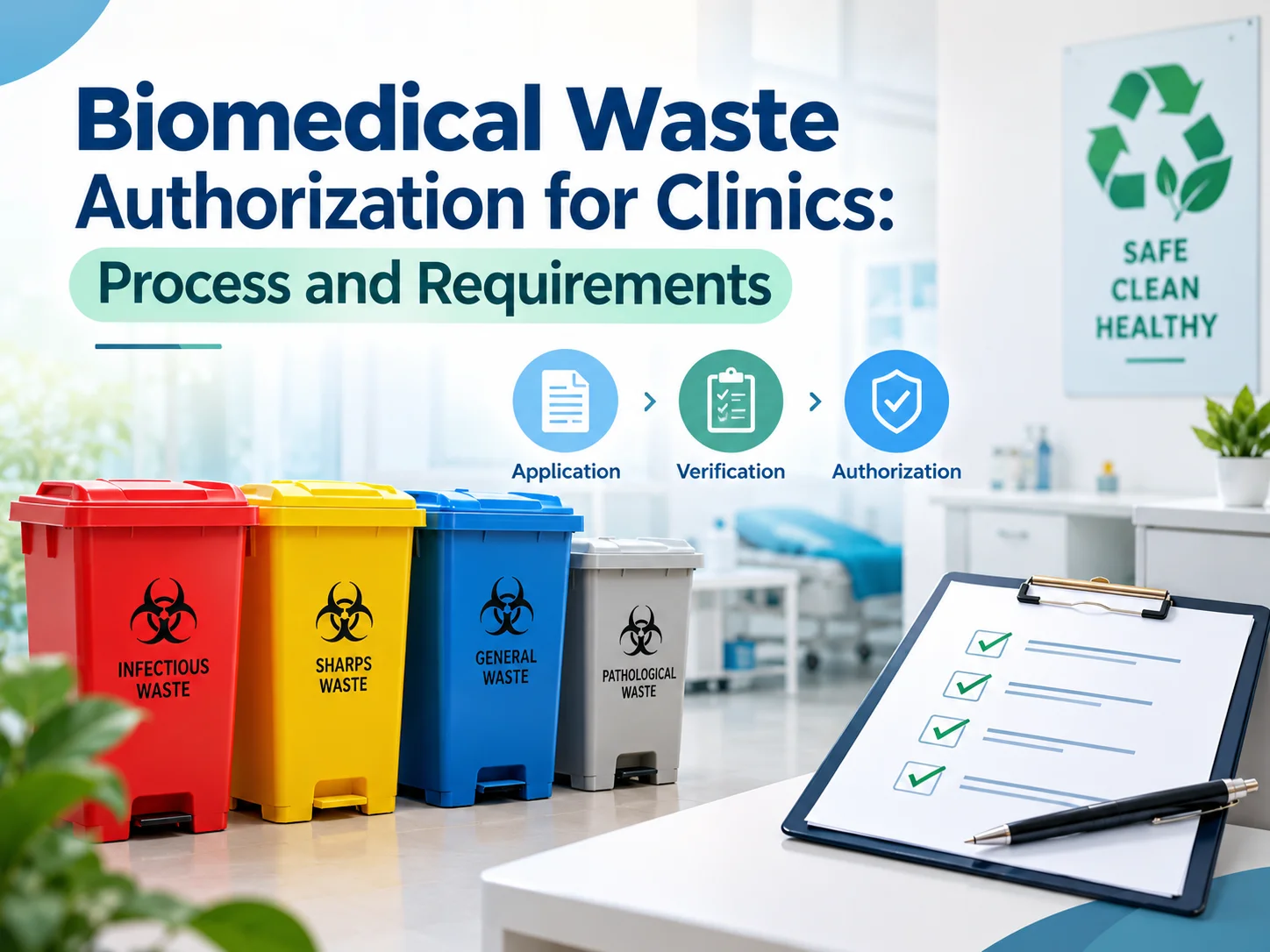
Medical waste segregation uses four colours. Hospital annual returns show how they map:
Yellow: Includes specified anatomical, soiled, and other listed waste categories.
Red: Covers specified contaminated recyclable plastic waste.
White (translucent): Covers specified waste sharps, including metals.
Blue: Covers specified glassware and metallic body implants.
Use color-coded waste bins and never let the yellow bin double as a general-purpose bin.
Bar-code your bags. The rules require a bar-code system for bags or containers that leave the premises.
Keep waste away from municipal solid waste. A published hospital authorization letter bars mixing treated or untreated biomedical waste with municipal solid waste.
Handle record maintenance daily. That same letter requires you to update waste generation records day to day.
File the annual report. Form IV reaches your board by 30 June every year.
Train your team. Form IV asks how many trainings you ran and how many staff remain untrained, so build biohazard waste handling into onboarding.
Together, these steps deliver hospital waste compliance and meet environmental safety standards. Your board's waste management guidelines fill in the finer detail.
Also Read This Blog: Medical Imaging Equipment Selection Guide: MRI, CT, X-Ray, USG and Cath Lab
Common Biomedical Waste Authorization Mistakes to Avoid
Even a well-managed clinic can overlook important compliance details. Avoid these common mistakes:
Incomplete documentation: Missing information can lead to application queries and delays.
Incorrect segregation: Staff may place waste in the wrong container if training is inadequate.
Unverified collection providers: Confirm that the selected waste treatment facility has the required authorization.
Poor record maintenance: Missing collection details can make compliance checks more difficult.
Ignoring changes: New services, additional premises, or changes in waste-handling arrangements may require regulatory review.
Nexa Health Consult encourages healthcare facilities to establish clear responsibilities, document their procedures, and review compliance regularly. A systematic approach supports risk reduction and more reliable operations.
How Nexa Health Consult Supports Your Clinic
Nexa Health Consult brings professional assistance to the paperwork. Our Healthcare Consultants Noida team reviews your documents, prepares a simplified application and explains the rules in plain language. Clinics searching for Hospital Consulting Delhi NCR get transparent procedures, efficient processing and a clear path toward timely certification and waste management certification. The goal is hassle-free registration and reliable authorization, with no surprises at inspection.
Get Professional Support for Biomedical Waste Authorization — Contact Nexa Health Consult
Managing healthcare waste correctly protects patients, staff, and the environment while helping your clinic meet its legal obligations. Biomedical Waste Authorization should therefore form part of your clinic's compliance planning, not become an afterthought during an inspection.
Nexa Health Consult can help healthcare establishments understand the documentation process, identify compliance gaps, and prepare for the applicable regulatory requirements. If you need guidance on Biomedical Waste Authorization, connect with our team for professional assistance and a clearer path toward regulatory compliance.
For more information, visit our Google Business Profile and contact us to discuss your clinic's requirements. You can also explore our Hospital Consulting Delhi NCR services for broader healthcare establishment and compliance guidance.