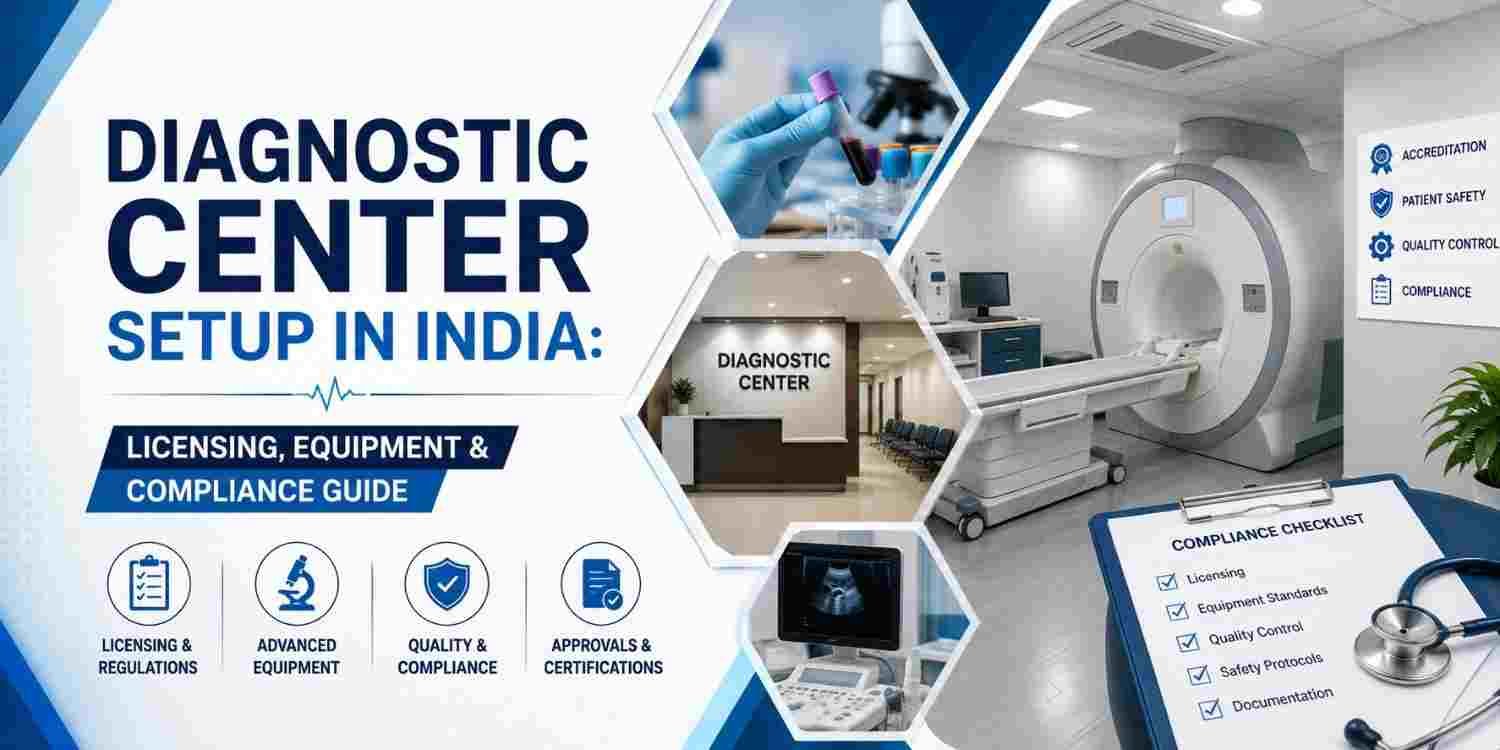
Starting a diagnostic centre is not simply a matter of renting a space, buying machines and putting up a signboard. A successful centre needs a sound business model, qualified professionals, appropriate equipment, documented processes and regulatory compliance. If you are researching how to open a diagnostic centre, the first step is to understand which services you actually intend to provide.
For entrepreneurs planning a project in the Delhi-NCR region, professional guidance from Hospital Consulting Delhi NCR can help connect the business plan with operational, financial and compliance requirements. Nexa Health Consult approaches healthcare projects with a focus on practical planning, efficient systems and long-term sustainability.
This guide explains the major considerations involved in how to open a diagnostic centre, from licensing and equipment to quality systems and patient safety.
What Does a Diagnostic Centre Include?
A diagnostic centre may provide laboratory investigations, imaging services, or both. The exact regulatory and infrastructure requirements depend on the services offered.
The Ministry of Health and Family Welfare's Clinical Establishments Division separately provides standards and guidance for medical diagnostic laboratories, MRI centres, CT/PET-CT centres, sonography clinics and X-ray facilities.
That distinction matters because a pathology lab setup does not face exactly the same requirements as a radiology facility.
Before spending money, define your service mix:
Clinical pathology and routine laboratory testing
Biochemistry and hematology
Microbiology
Histopathology
Molecular diagnostics
X-ray
Ultrasound
CT or MRI
Sample collection services
A clear service mix makes equipment planning, staffing, budgeting and regulatory compliance much easier.
Also Read: How to Open a Hospital in India: Complete Step-by-Step Guide (2026)
Build a Diagnostic Centre Business Plan First
A diagnostic centre business plan should come before equipment purchasing. Otherwise, it is surprisingly easy to spend heavily on technology that your local market does not actually need.
Start by studying:
Target patient population
Nearby hospitals and clinics
Existing diagnostic providers
Proposed test and imaging menu
Referral relationships
Expected patient volumes
Staffing requirements
Premises and infrastructure
Equipment investment
Recurring operating costs
Quality and compliance requirements
Pricing strategy
The plan should also separate capital expenditure from recurring expenditure. Equipment, interiors, electrical work and IT infrastructure generally fall into the investment side, while salaries, reagents, maintenance, utilities, waste management and other operating expenses continue after launch.
What About Radiology Setup Cost in India?
There is no single reliable figure for radiology setup cost in India because the investment changes substantially with the modality and project scope.
An X-ray centre, ultrasound facility, CT centre and MRI facility require very different equipment, infrastructure, staffing and compliance arrangements. AERB requirements also apply to facilities using medical diagnostic X-ray equipment.
Therefore, avoid using a generic online “setup cost” as your project budget. A proper feasibility assessment should calculate the cost according to the exact equipment list, premises, workflow, staffing model and service volume.
This is one area where Healthcare Management Consulting Noida can be useful for entrepreneurs who need to connect financial planning with actual operational requirements.
Diagnostic Center Licensing: What You Need to Check
Licensing is one of the most important parts of learning how to start diagnostic centre operations in India. Requirements vary according to the location and services offered, so there is no universal checklist that applies identically to every centre.
The Clinical Establishments Act, 2010 provides for registration and regulation of clinical establishments and includes diagnostic centres and laboratories within its framework. However, its adoption differs across states and Union Territories. The Ministry's current information specifically notes that the Act has been adopted in certain states/UTs and does not apply in the same way everywhere.
Therefore, identify your state and local authority before assuming that a particular registration applies.
Clinical Establishments Act
Where applicable, the Clinical Establishments Act establishes minimum standards and registration requirements. The Ministry of Health and Family Welfare also publishes specific diagnostic-centre standards covering laboratory and imaging services.
For a new project, review the applicable state rules rather than relying on a generic national checklist.
AERB Approval for Radiology
If your centre uses X-ray-based equipment, AERB approval becomes an important compliance consideration.
The Atomic Energy Regulatory Board (AERB) requires X-ray institutions to obtain the necessary regulatory consents through its e-LORA system. AERB also provides guidance covering diagnostic radiology facilities, radiation safety, personnel requirements and shielding.
This makes radiology centre compliance more than a paperwork exercise. Radiation safety affects room design, equipment installation, monitoring and staff practices.
Ultrasound and PCPNDT Compliance
If your proposed centre offers ultrasound services covered by the applicable law, you must examine the PCPNDT Act and the relevant registration requirements.
The Pre-Conception and Pre-Natal Diagnostic Techniques (Prohibition of Sex Selection) Act, 1994 regulates genetic counselling centres, genetic laboratories and genetic clinics and includes provisions relating to registration and prenatal diagnostic techniques.
Accordingly, PCPNDT registration should be treated as a core planning issue for applicable ultrasound services rather than something to address after installation.
The exact application process and documentation should be confirmed with the appropriate authority in the state where the centre will operate.
Equipment Requirements for a Diagnostic Centre
Equipment requirements should follow the test menu, expected workload and applicable standards.
A laboratory may require equipment such as:
Hematology analyzers
Biochemistry analyzers
Immunoassay systems
Microscopes
Centrifuges
Refrigeration and sample-storage systems
Microbiology equipment
Histopathology equipment, where applicable
Imaging facilities may require:
X-ray systems
Ultrasound equipment
CT scanners
MRI systems
Do not select equipment based only on brand name or advertised specifications. Consider service support, calibration, consumables, software compatibility, uptime, maintenance contracts and staff competency.
For laboratories, NABL accreditation can provide an important quality framework. The National Accreditation Board for Testing and Calibration Laboratories states that it accredits medical laboratories against ISO 15189.
Accreditation should not be confused with basic legal permission to operate. They serve different purposes and should be planned accordingly.
Staffing and Laboratory Quality
A diagnostic centre depends heavily on its people. Even sophisticated equipment cannot compensate for poorly designed workflows or inadequate supervision.
Your staffing plan may include qualified laboratory professionals, technicians, radiographers, radiologists, pathologists and administrative personnel, depending on the services offered.
The applicable minimum standards should guide your lab technician requirements, professional qualifications and staffing structure. The Ministry's Clinical Establishments Division publishes minimum standards and related amendments for medical diagnostic laboratories.
Strong centres also establish standardized testing procedures, quality control processes, equipment maintenance schedules and documented reporting workflows.
The goal is straightforward: accurate diagnosis, reliable test results and patient safety.
Biomedical Waste Management
Diagnostic services can generate biomedical waste, so biomedical waste management needs to become part of the centre's operating system from day one.
The Biomedical Waste Management Rules, 2016 place responsibilities on healthcare facilities for appropriate handling and disposal of biomedical waste. CPCB guidance also addresses segregation and management of waste generated by healthcare facilities.
Your operational plan should therefore cover:
Waste segregation
Appropriate containers and colour coding
Safe collection and storage
Authorized treatment and disposal arrangements
Staff training
Documentation and monitoring
Good waste management supports a hygienic laboratory environment while protecting patients, workers and the surrounding community.
Design the Centre Around Patient Flow
Compliance should not make the centre feel like a maze.
Plan the facility around the patient's journey: registration, waiting, sample collection or imaging, processing, reporting and result delivery. Clear movement reduces unnecessary delays and supports efficient patient care.
Privacy, infection control, accessibility, emergency preparedness and safe diagnostic procedures should also influence the layout.
Technology can help here. A laboratory information system or suitable diagnostic IT platform can support sample tracking, reporting and operational visibility. However, technology should serve the workflow, not become an expensive decoration.
Why Healthcare Consulting Can Help
Setting up a diagnostic centre involves several disciplines at once: healthcare planning, finance, equipment selection, staffing, workflow, compliance and quality management.
Nexa Health Consult, led by Dr. Sanjeev Kalra, brings healthcare planning and management experience across Indian and US healthcare environments. Dr. Kalra has 20 years of experience in healthcare planning, development and implementation, including five years of experience in the US healthcare system. His background includes clinical expertise, hospital management, financial planning and executive healthcare leadership.
His qualifications include an MD, MDBA in Hospital Management & Finance, AHCLM in Executive Healthcare Leadership and Management from Johns Hopkins University, USA, and an MHA from the University of Phoenix.
For entrepreneurs considering how to open a diagnostic centre, this type of multidisciplinary planning can help connect the initial concept with feasibility, operational planning, workflow design, quality improvement and implementation.
A Practical Pre-Launch Checklist
Before opening the doors, review the project across five areas:
Business: Confirm the service mix, market opportunity, financial model and pricing strategy.
Licensing: Identify all registrations and permissions applicable to your location and services.
Equipment: Match equipment with your diagnostic menu, workload, infrastructure and maintenance requirements.
People: Verify professional qualifications, staffing levels, responsibilities and training.
Quality: Establish documented procedures, quality control, patient-safety processes, reporting systems and biomedical-waste protocols.
This approach is much safer than treating licensing and compliance as a last-minute checklist.
Key Takeaways for Setting Up a Diagnostic Centre in India
Knowing how to open a diagnostic centre successfully requires more than understanding the cost of machines. A dependable diagnostic centre combines appropriate technology, qualified professionals, efficient workflows, regulatory compliance and a strong commitment to patient safety.
The regulatory landscape also depends on what you offer. Laboratory services, X-ray, CT, MRI and ultrasound can have different requirements, so entrepreneurs should verify the rules applicable to their state and specific services before making major investments.
The best diagnostic centre business plan connects clinical requirements with financial feasibility, operational planning and compliance from the beginning. With structured planning, a centre can build a reputation for accurate diagnosis, reliable reports, transparent pricing and quality healthcare services rather than simply competing on the number of machines it owns.
Nexa Health Consult brings a practical, structured approach to diagnostic centre planning, helping healthcare entrepreneurs navigate feasibility, project development, equipment planning, workflow design, compliance and operational readiness. Contact Nexa Health Consult today to discuss your diagnostic centre project and get professional guidance to build a compliant, efficient and sustainable healthcare facility from the ground up.