How Patient Experience Impacts Hospital Revenue and Reputation
The patient experience impact on hospitals has become one of the most important factors in modern healthcare strategy. Today, hospitals no longer compete only on medical expertise; they compete on experience, trust, and service quality.
Healthcare providers and investors often consult a Healthcare Consulting Firm Dubai like Nexa Health Consult to understand how improving patient experience directly influences revenue growth, brand reputation, and long-term sustainability.
Even firms offering hospital setup consultant services now prioritize patient journey design at the early planning stage because experience is no longer an extra; it is a core performance driver.
To put it simply: a hospital may save lives, but patient experience decides whether people come back or recommend it.
Understanding Patient Experience in Modern Healthcare
The concept of patient experience goes beyond treatment outcomes. It includes every interaction a patient has within a hospital, clinic, or broader healthcare system.
It covers:
Waiting time before consultation
Communication with doctors and staff
Cleanliness and environment
Transparency in treatment
Emotional support during care
The patient care experience is now a measurable part of healthcare service quality, tracked by hospitals worldwide.
According to global healthcare frameworks such as those referenced by the World Health Organization (WHO), patient-centred care improves both satisfaction and clinical outcomes when implemented correctly.
In simple terms, patients don’t just remember the treatment; they remember how they were treated.
How Patient Experience Directly Impacts Hospital Revenue
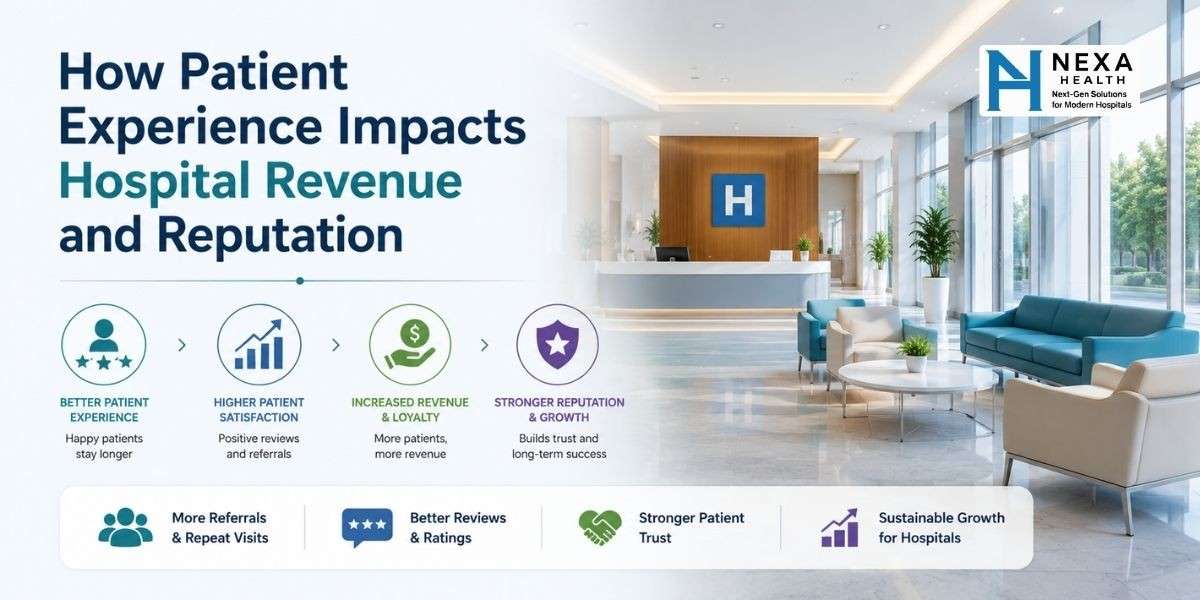
The patient experience impact on hospitals is strongly tied to revenue generation. A better experience leads to higher trust, repeat visits, and referrals.
Key Financial Outcomes of Improved Hospital Patient Satisfaction
Higher patient retention
Increased referrals through word-of-mouth
Better insurance partnerships
Stronger brand trust in the market
A strong patient journey in healthcare improves how patients perceive value. This directly enhances healthcare customer experience, which influences hospital selection decisions.
Let’s be honest, patients talk. A good experience gets shared. A bad one spreads faster than hospital paperwork delays.
Hospitals that invest in healthcare service quality see long-term financial improvement because satisfied patients naturally return and recommend services.
This is why organizations like Nexa Health Consult, a trusted Healthcare Consulting Firm, emphasize experience design as part of hospital business planning.
Hospital Reputation and Trust Building Through Patient Experience
Hospital reputation is no longer built only on medical success stories. It is shaped by every patient interaction.
Strong hospital reputation management depends heavily on how well a hospital delivers consistent care experiences.
Key Benefits of a Positive Patient Care Experience
Better public reviews
Higher trust in the healthcare system
Stronger brand recognition
Increased patient confidence
This creates long-term hospital trust building, which is critical in competitive healthcare markets like Dubai.
When patients feel heard, respected, and supported, they naturally associate the hospital with reliability and professionalism.
And yes, in healthcare, reputation spreads faster than any marketing campaign ever could.
Healthcare Service Quality and Operational Impact
The quality of healthcare service plays a major role in shaping the overall patient experience impact on hospitals.
Key operational factors include:
Staff responsiveness
Waiting time management
Communication clarity
Clinical efficiency
Improving healthcare service quality leads to a better healthcare service experience, which directly improves patient satisfaction outcomes.
Hospitals that invest in service quality improvements often see:
Higher patient retention
Improved operational efficiency
Better clinical performance perception
Firms like Nexa Health Consult, along with hospital setup consultants in Dubai, often integrate service quality planning into early-stage hospital design to avoid long-term inefficiencies.
Importance of Patient Journey in Healthcare Systems
The patient journey in healthcare includes every step from entry to discharge. It is one of the most critical factors influencing satisfaction.
A well-designed journey improves:
Comfort during treatment
Communication clarity
Emotional well-being
Trust in medical staff
The modern healthcare system now prioritizes experience mapping alongside clinical excellence.
Hospitals that optimize the patient care experience often achieve a stronger healthcare customer experience, which leads to better reputation and revenue performance.
In today’s healthcare industry, experience is not optional; it is a strategic infrastructure.
Conclusion: Why Patient Experience Defines Hospital Success
The patient experience impact on hospitals is no longer a secondary consideration; it is a primary success factor.
Hospitals that focus on hospital patient satisfaction, healthcare service quality, and patient journey in healthcare consistently perform better in both revenue and reputation.
With growing competition in the healthcare industry, organizations like Nexa Health Consult, a leading Healthcare Firm, help hospitals design systems that improve both clinical outcomes and patient experiences.
From patient experience to hospital reputation management, every touchpoint matters in building long-term success. In healthcare, technology heals, but experience builds trust.
Ready to improve your hospital performance and patient experience? Contact Nexa Health Consult today for expert healthcare consulting solutions in Dubai.