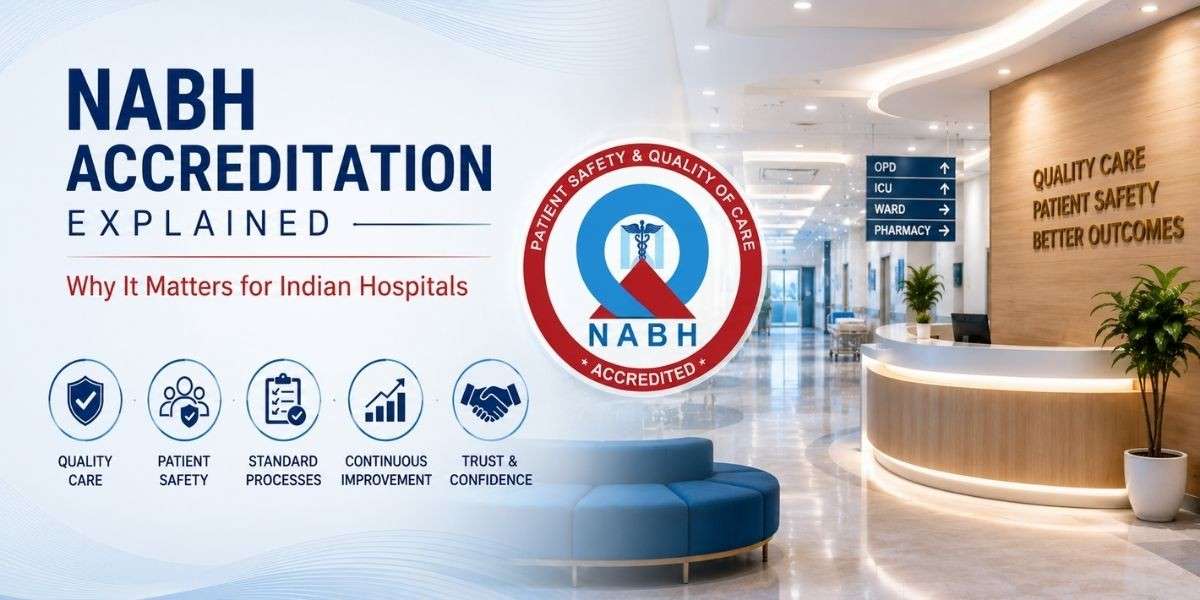
NABH Accreditation Explained: Why It Matters for Indian Hospitals
A hospital is not judged only by the treatments it provides or the technology it uses. Patients also look for something equally important: trust. They want to know that the hospital follows safe practices, maintains proper systems, and focuses on delivering consistent quality care.
This is where NABH Accreditation becomes important. For Indian hospitals, accreditation provides a structured framework to improve healthcare quality, strengthen patient safety practices, and create reliable operational systems. Hospitals that want to improve their quality management approach often seek expert guidance through Healthcare Consulting India services to understand requirements, identify gaps, and prepare effectively.
However, NABH Accreditation is not simply about receiving a certificate. It is a continuous quality improvement journey that requires hospitals to align their processes, staff practices, and management systems with recognized healthcare standards.
At Nexa Health Consult, we support healthcare organizations by helping them understand accreditation requirements, improve compliance readiness, and develop practical strategies for healthcare quality improvement.
What is NABH Accreditation?
Before understanding its importance, let’s answer the basic question: what is NABH?
NABH stands for National Accreditation Board for Hospitals & Healthcare Providers. It is a constituent board of the Quality Council of India (QCI) that provides accreditation programs for healthcare organizations.
NABH develops healthcare quality standards designed to evaluate whether healthcare organizations have appropriate systems in place for safe and effective patient care.
The purpose of NABH Accreditation is to encourage hospitals to establish structured processes related to:
Patient safety
Quality healthcare delivery
Clinical processes
Hospital management systems
Continuous improvement
NABH accreditation evaluates not only medical services but also the overall functioning of a healthcare organization, including how it manages patients, information, medication, infection control, and safety practices.
Understanding the Role of QCI in NABH
The Quality Council of India (QCI) plays an important role in India’s quality ecosystem. NABH operates as one of the accreditation boards under QCI.
The relationship between NABH and QCI helps create a structured accreditation system where healthcare organizations are assessed against defined standards.
For hospitals, this means NABH Accreditation follows a recognized evaluation framework rather than an informal quality checklist.
The assessment focuses on whether hospitals have implemented effective systems that support:
Safe patient care
Consistent healthcare practices
Better documentation
Risk management
Quality improvement
This structured approach helps healthcare providers move toward maintaining healthcare standards in their daily operations.
Why Does NABH Accreditation Matter for Indian Hospitals?
The Indian healthcare sector has expanded rapidly, and patients today expect more than just medical treatment. They want safe, transparent, and reliable healthcare experiences.
NABH Accreditation helps hospitals create systems that support these expectations.
Building Healthcare Trust
Trust is one of the most valuable assets for any hospital.
When a hospital follows NABH standards, it demonstrates its commitment toward organized processes, patient safety, and quality improvement.
Accreditation encourages hospitals to create systems where responsibilities are clearly defined and patient care processes are consistently followed.
This helps in building healthcare trust among patients, families, and healthcare partners.
Improving Patient Safety
Patient safety is one of the central areas covered under NABH standards.
Hospitals are expected to develop processes that reduce risks and improve care delivery.
Important areas include:
Medication management
Infection prevention practices
Patient identification procedures
Emergency care processes
Clinical documentation
By focusing on these areas, hospitals can create safer environments for both patients and healthcare professionals.
Supporting Better Hospital Management
A hospital involves multiple departments working together every day. Without proper systems, communication gaps and operational challenges can affect efficiency.
NABH Accreditation encourages hospitals to review and improve their internal processes.
This can help healthcare organizations with:
Better workflow management
Clear staff responsibilities
Improved documentation
More organized patient care systems
The objective is not just compliance but achieving operational excellence through structured healthcare practices.
Understanding the NABH Accreditation Process
The NABH accreditation process involves preparation, implementation, assessment, and continuous improvement.
Hospitals need to demonstrate that their quality systems are effectively implemented, not just documented.
Step 1: Understanding NABH Standards
The first step is understanding the applicable NABH standards and identifying areas where improvements are required.
NABH hospital accreditation standards cover various aspects of healthcare operations, including:
Access, assessment, and continuity of care
Patient care responsibilities
Medication management
Patient rights and education
Hospital infection control
Quality improvement
Facility management and safety
Human resource management
Information management systems
These standards help hospitals create a complete framework for delivering quality healthcare.
Step 2: Gap Assessment and Implementation
After understanding the standards, hospitals evaluate their existing systems.
This stage helps identify gaps related to:
Documentation
Clinical processes
Safety procedures
Staff training
Quality monitoring
Hospitals then work on improving these areas and implementing required processes.
Many organizations take support from healthcare consultants during this stage because accreditation preparation requires coordination between clinical, administrative, and operational teams.
Step 3: NABH Assessment Process
During the NABH assessment process, trained assessors review whether the hospital meets the required standards.
The assessment includes evaluation of:
Hospital policies
Patient care practices
Quality indicators
Safety systems
Infrastructure
Documentation
The assessment provides an objective review of the hospital’s quality management system.
Step 4: Accreditation Decision and Continuous Improvement
After assessment, NABH reviews the findings and determines whether the organization meets accreditation requirements.
However, achieving NABH Accreditation is not the final step.
Healthcare organizations need continuous monitoring and improvement to maintain quality standards over time.
Understanding NABH Levels
Many hospitals search for information about NABH levels because NABH provides different accreditation pathways based on organizational readiness.
NABH Entry Level Accreditation
NABH Entry Level Accreditation is designed as an initial quality improvement pathway for hospitals that want to begin their accreditation journey.
It helps healthcare organizations establish basic quality systems and gradually improve their processes.
Hospitals working toward entry-level accreditation focus on developing structured systems related to patient safety, documentation, and operational processes.
The NABH entry level logo represents this accreditation category after fulfilling applicable NABH requirements.
Hospitals can continue improving their systems and work toward higher accreditation levels as they strengthen their quality framework.
Benefits of NABH Hospital Accreditation
Achieving NABH hospital accreditation provides several advantages for healthcare organizations.
Better Quality Systems: Hospitals develop structured processes that support consistent healthcare delivery.
Improved Clinical Performance: Standardized systems help healthcare teams review their practices and identify areas for improvement.
Stronger Patient Experience: Clear processes and safety practices contribute to better patient experiences.
Improved Organizational Credibility: Accreditation demonstrates a hospital’s commitment to maintaining healthcare standards and quality-focused operations.
Common Challenges Hospitals Face During NABH Preparation
Although NABH Accreditation provides significant value, preparation requires commitment from the entire organization.
Common challenges include:
Understanding accreditation requirements
Maintaining proper documentation
Training hospital staff
Implementing consistent processes
Managing quality improvement alongside daily operations
The biggest challenge for many hospitals is changing quality practices from a project-based activity into a continuous culture.
How Nexa Health Consult Helps Hospitals Prepare for NABH Accreditation
Preparing for NABH Accreditation requires proper planning, understanding of standards, and coordinated implementation.
Nexa Health Consult helps healthcare providers navigate the accreditation journey by offering professional guidance in areas such as:
NABH standards understanding
Gap assessment
Documentation support
Quality improvement planning
Accreditation readiness guidance
Through expert Healthcare Consulting India services, hospitals can create a structured roadmap for improving their quality systems and preparing for accreditation requirements.
The focus is not only on achieving accreditation but also on developing sustainable practices that support better healthcare delivery.
Strengthening Indian Healthcare Through NABH Accreditation
NABH Accreditation represents a hospital’s commitment toward safer processes, stronger management systems, and continuous quality improvement. For Indian hospitals, it provides a structured pathway to enhance healthcare delivery, improve operational efficiency, and build greater confidence among patients and stakeholders.
Whether your hospital is starting its NABH accreditation journey or working to strengthen existing quality systems, having the right guidance can make the process more organized and effective.
Nexa Health Consult helps healthcare organizations understand NABH requirements, identify improvement areas, and prepare a practical roadmap for accreditation readiness.
Ready to take your hospital’s quality standards to the next level? Contact Nexa Health Consult today for expert NABH Accreditation consulting and healthcare quality improvement support.