How to Choose Between a Nursing Home, Clinic, or Hospital License in India
Choosing between a clinic and a nursing home is not simply a matter of picking a bigger or smaller healthcare setup. The services you plan to provide, the facility you operate, the number of beds, and the state where you establish it can all affect your registration and compliance requirements.
If you are planning a healthcare facility in Delhi NCR, getting the licensing structure right from the beginning can save considerable compliance trouble later. Businesses looking for Hospital Consulting Delhi NCR often need to assess the proposed facility before deciding which registration route applies. This is where proper healthcare establishment registration and licensing clarity become important.
The key point is simple: there is no single nationwide clinic licence or nursing home licence that works identically in every state. India uses a combination of central laws, state-specific legislation, local requirements and professional regulations. The official Clinical Establishments portal itself notes that the Clinical Establishments (Registration and Regulation) Act, 2010 does not apply uniformly across every state and that states may adopt the framework under Article 252.
Nursing Home vs Clinic License: What Is the Difference?
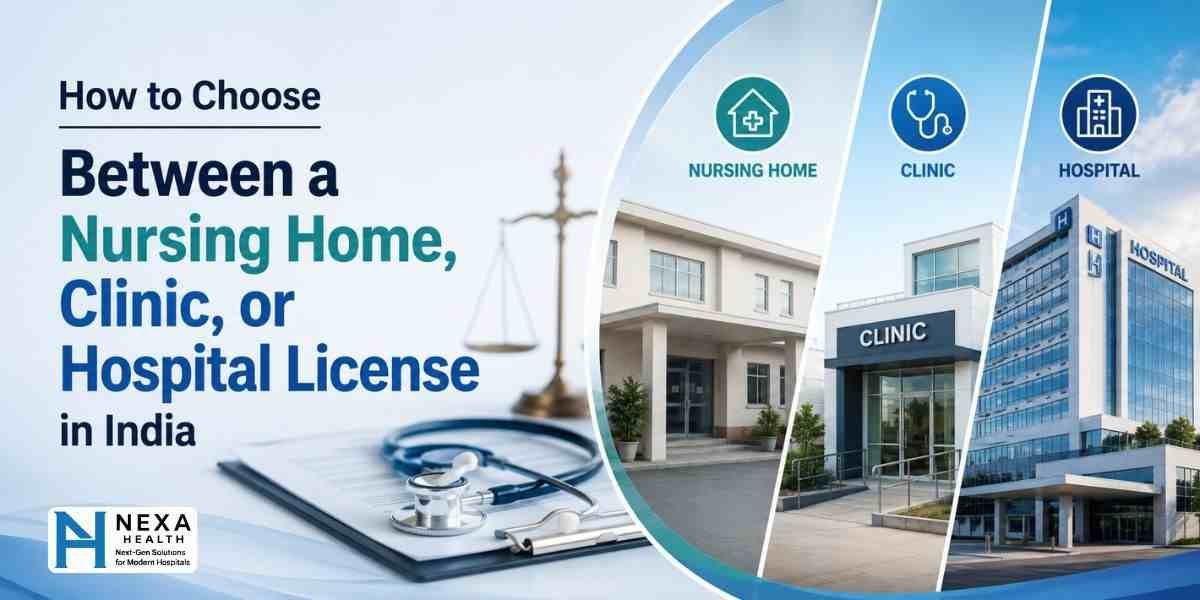
Before choosing a licence, you need to understand what each facility actually does. A clinic generally focuses on consultation, diagnosis and treatment without functioning as a full inpatient facility. A nursing home, on the other hand, generally involves a more substantial healthcare setup and may provide inpatient care.
The exact legal classification can vary by jurisdiction, so you should not rely only on the name displayed outside the building. Calling a facility a clinic does not automatically make its regulatory obligations those of a clinic.
Under the Clinical Establishments (Registration and Regulation) Act 2010, the definition of a clinical establishment includes hospitals, nursing homes, clinics, dispensaries and other establishments providing diagnosis, treatment or care. The framework can also cover diagnostic centres and establishments providing laboratory-related services.
That makes the correct license a question of actual operations rather than branding.
What Is Usually Considered a Clinic?
A clinic typically provides services such as:
Doctor consultations
Patient examination and diagnosis
Follow-up treatment
Basic procedures where legally permitted
Outpatient medical services
The exact requirements depend on the state and services offered. A single-doctor facility is also included within the definition of a clinical establishment under the central framework where that framework applies.
So, even a small practice should not assume that “small” means “no registration.”
What Is a Nursing Home?
A nursing home generally represents a more extensive healthcare establishment, particularly where patients receive inpatient or nursing care.
Once your proposed facility includes beds, overnight patient care, nursing services or more extensive treatment infrastructure, the nursing home registration process may involve requirements beyond those applicable to a basic outpatient clinic.
The practical lesson is straightforward: your planned services should determine your regulatory category, not the other way around.
Why Location Matters When Choosing the License
Healthcare licensing in India becomes particularly interesting because the rules can differ from one state or Union Territory to another.
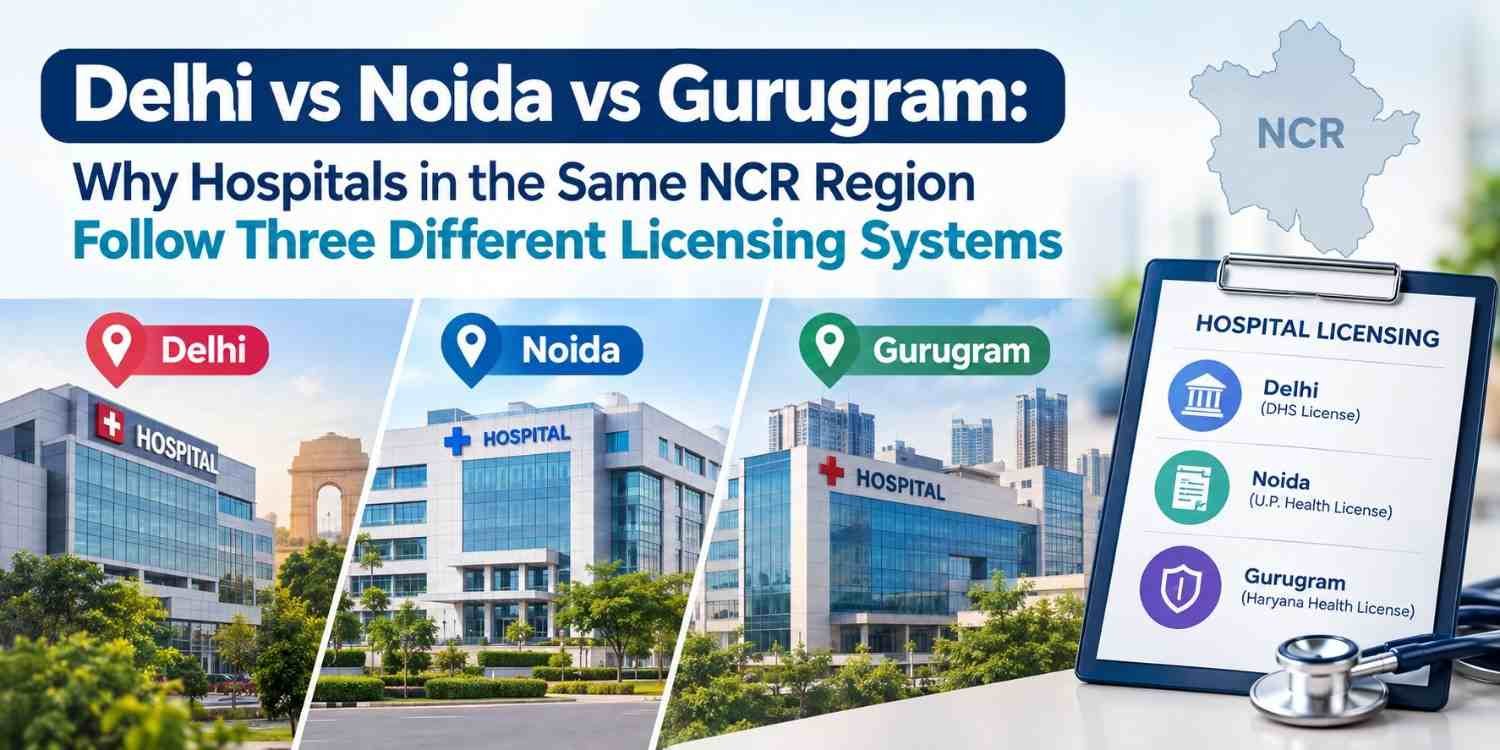
For example, the central government's Clinical Establishments framework has been adopted in several states, including Uttar Pradesh and Haryana, but the official portal specifically states that the framework does not extend to the NCT of Delhi.
Delhi instead has its own Delhi Nursing Homes Registration Act, 1953. The Delhi government states that private nursing homes and hospitals must be registered under the applicable Delhi framework.
This distinction matters enormously for businesses operating in Delhi NCR.
A facility in Noida may face a different registration pathway from a similar facility in Delhi, even though both are only a short drive apart. The same principle applies when comparing Delhi with locations in Haryana.
This is why Healthcare Management Consulting Noida may involve a different regulatory assessment than a healthcare project in Delhi.
Clinic Registration Process: What Should You Assess?
The first step in the clinic registration process is to clearly define what the clinic will actually provide.
Ask yourself:
Will the facility provide consultation only?
Will diagnostic services be offered?
Will procedures be performed?
Will patients stay overnight?
Will medicines be dispensed?
Will laboratory or imaging services operate from the premises?
How many healthcare professionals will work there?
These questions help establish the facility's operational profile.
Where the Clinical Establishments Act applies, the central framework provides for registration of clinical establishments and establishes minimum standards for different categories. It also provides for provisional and permanent registration mechanisms.
However, that does not mean every clinic across India follows one identical application process. State adoption and local rules still matter.
A professional medical establishment license assessment should therefore consider both the facility's activities and its location.
Nursing Home Registration: When the Requirements Become Broader
A nursing home generally requires a more detailed assessment because inpatient operations introduce additional operational requirements.
You may need to evaluate areas such as:
Bed capacity
Nursing arrangements
Qualified medical personnel
Building and facility standards
Patient safety arrangements
Emergency provisions
Records and documentation
Applicable local permissions
Waste management and other statutory requirements
The exact list depends on the applicable state and the services offered.
Delhi provides a useful example. Its government maintains a Nursing Home Cell responsible for registration and renewal of private hospitals and nursing homes. The Delhi government also publishes information about registered nursing homes, including registration validity and approved bed strength.
That demonstrates why nursing facility registration should be approached as a facility-level compliance exercise rather than a simple form-filling task.
Clinic or Nursing Home: Which One Should You Choose?
The answer depends on your intended business model.
Choose a Clinic Structure If:
Your facility primarily provides outpatient consultation and treatment and does not operate as an inpatient nursing facility.
This can be suitable for doctors and healthcare entrepreneurs who want to establish an outpatient practice without creating a residential or inpatient care model.
But remember: a clinic can still have significant legal compliance obligations depending on its services, location and supporting facilities.
Consider a Nursing Home Structure If:
Your business model requires inpatient care, beds or nursing services beyond ordinary outpatient consultation.
In that situation, trying to structure the facility as a simple clinic merely because the name sounds easier can create unnecessary regulatory compliance problems.
The correct approach is to classify the facility according to what it actually does.
What About a Hospital License?
A hospital is generally a broader healthcare operation with potentially multiple departments, inpatient services, diagnostic capabilities, emergency services and larger staffing and infrastructure requirements.
The Clinical Establishments portal itself lists hospitals as a category of clinical establishment and publishes category-specific information and minimum standards.
Therefore, if your business plan already includes substantial inpatient infrastructure, multiple specialties or hospital-level services, choosing a basic clinic structure simply to simplify registration may not provide appropriate legal protection.
Your facility classification should match the services you intend to deliver.
Key Compliance Areas to Check Before Registration
Getting the primary registration right is only one part of opening a healthcare facility.
Depending on the facility and location, you may need to review several additional compliance areas.
Professional and Staffing Requirements
Doctors and other healthcare professionals must hold the registrations and qualifications applicable to their profession. The National Medical Commission maintains systems relating to medical practitioner registration and professional regulations.
Staffing requirements can also depend on the category of facility and services provided.
Facility and Safety Requirements
Your premises may need to satisfy applicable building, fire safety, sanitation and other local requirements. The exact approvals depend on the jurisdiction and nature of the facility.
Records and Patient Information
The Clinical Establishments framework includes provisions relating to records, information and reporting by registered establishments. It also requires relevant information such as charges and available facilities to be displayed as prescribed.
These requirements make documentation part of day-to-day healthcare operations, not an administrative chore you remember only when an inspector arrives.
How to Make the Right Licensing Decision
Before starting your private healthcare facility registration, prepare a simple facility profile.
Document:
Location and state
Type of medical services
Outpatient or inpatient model
Proposed number of beds
Diagnostic services
Procedures offered
Medical and nursing staff
Proposed operating hours
Emergency services, if any
Additional facilities planned
Then compare this profile with the applicable state registration framework.
This creates licensing clarity and helps you make an informed decision before investing heavily in infrastructure.
Similarly, organisations planning facilities in Noida may benefit from Healthcare Management Consulting Noida when they need to evaluate the regulatory and operational implications of their proposed model.
How Nexa Health Consult Can Help
Healthcare licensing becomes much easier to manage when you separate the questions properly: What are you building? What services will you provide? Where will you operate? Which authority regulates that activity?
That approach helps reduce avoidable compliance risk.
Nexa Health Consult takes a professional, facility-focused approach to healthcare consulting, helping healthcare entrepreneurs understand their proposed operating model and identify the registrations and compliance areas that need attention.
Whether you are evaluating a clinic, nursing home or larger healthcare facility, the goal should not be to find the easiest licence. The goal is to obtain the appropriate registration for the services you genuinely intend to provide.
Nursing Home vs Clinic License: What Should You Choose?
The real question in nursing home vs clinic license is not simply, “Which licence is easier?” It is, “What type of healthcare facility am I planning to operate?”
A clinic may suit outpatient services, while a nursing home may be more appropriate for inpatient or nursing care. Since licensing requirements can vary by state, choosing the right registration from the beginning is essential.
Need help with healthcare licensing? Contact Nexa Health Consult today for professional guidance on choosing the right registration for your facility.